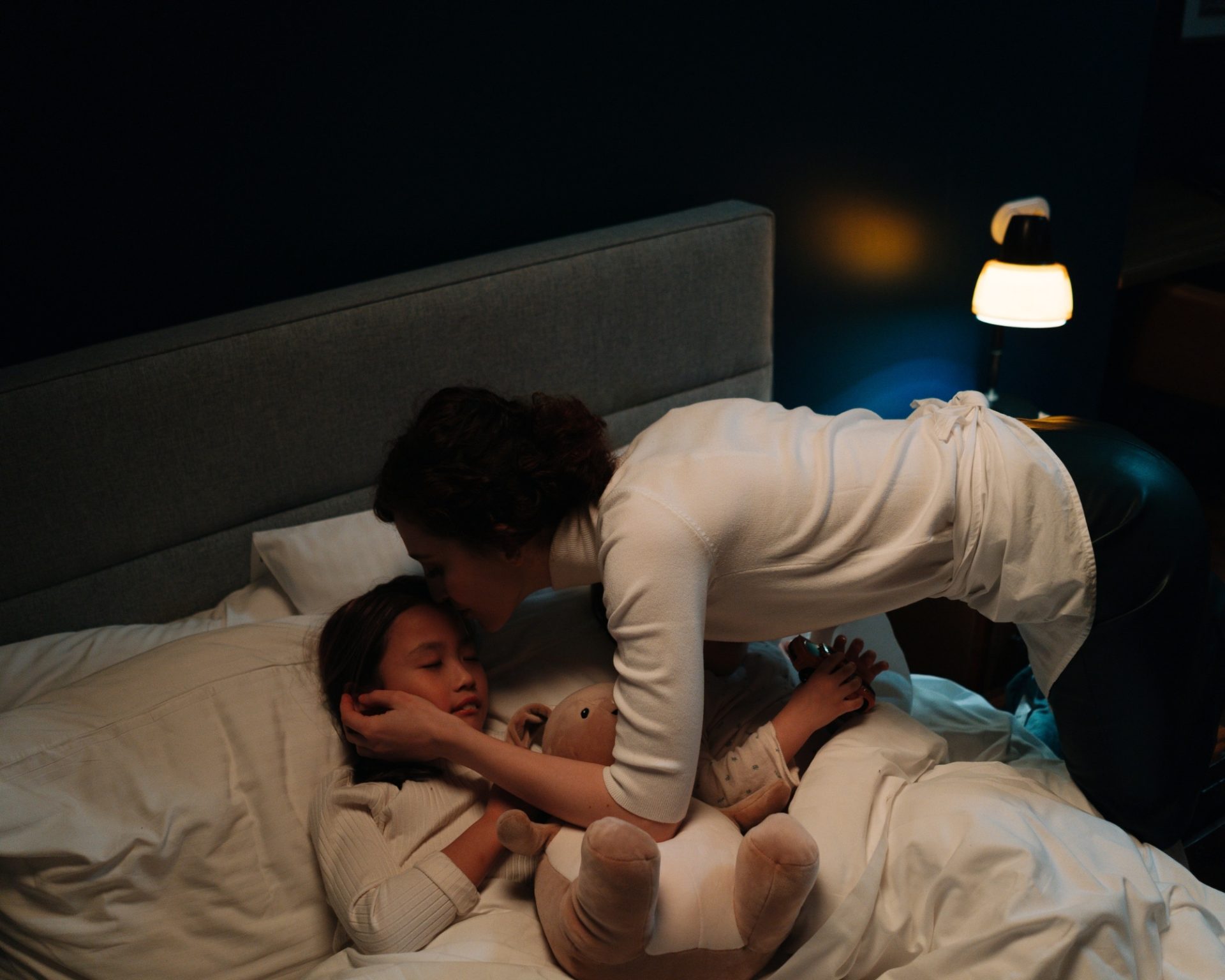
Bedwetting is a common childhood condition – but common doesn’t mean easy. For many families, the emotional weight of living with bedwetting night after night is something that rarely gets talked about honestly.
Frequent sheet changes, extra washing and disturbed sleep can be draining. But more draining still is the emotional toll bedwetting exacts on parents and children.
Bedwetting feels worse than…almost everything!
Here’s a finding that might stop you in your tracks. In one study, children and adolescents who wet the bed were asked to compare bedwetting with other stressful life events. Primary school-aged children ranked bedwetting third for psychological impact – behind only divorce and parental fighting.¹ Adolescents ranked it second, tied with parental fighting.¹
Think about what else was on that list: moving house, undergoing surgery, being excluded from a group, being teased. For the children and adolescents experiencing bedwetting, it ranked above all of them.
That’s a window into how profoundly this condition affects children’s inner lives, even when they appear to be coping on the outside.
Bedwetting’s impact on children
Children over 5 who wet the bed are often acutely aware that something is different. Many describe feelings of shame, guilt or failure, along with a persistent fear of being found out by a sibling, classmate or friend.² That fear can make ordinary childhood experiences, such as sleepovers or school camps, feel difficult to face.
The research reflects this lived experience. Children with bedwetting are at risk of social withdrawal, lower quality of life and reduced emotional wellbeing compared with children who do not experience the condition.³ When quality of life is measured directly, the effects are seen not only in how children feel about themselves, but also in their relationships with family and friends.⁴
Bedwetting’s impact on parents
Parents don’t get off lightly either – and the emotional burden they carry often goes unacknowledged. Many parents wonder, quietly, whether they’re doing something wrong – whether they should have addressed it sooner, been more patient, or handled it differently. Some feel too embarrassed to raise it with friends, or even with their GP.
The interrupted sleep, the relentless laundry, the sense that nothing is changing – any parent would find this difficult. Research confirms that mothers of children with bedwetting report higher levels of anxiety, stress, and helplessness than mothers of children without the condition.⁵
Remember, bedwetting is not caused by poor parenting, laziness, or a behavioural problem. It has physiological roots, most commonly an overproduction of urine at night, an overactive bladder, or difficulty rousing from sleep.⁶
Why silence makes it harder
One of the most damaging things about bedwetting is how little it gets talked about. Paradoxically, that’s also why it carries so much shame.
Children who wet the bed fear being discovered.² Parents often feel too embarrassed to raise it with a healthcare professional. The result is that families end up managing something quite significant, largely alone.
Only a small proportion of parents seek medical advice for their child’s bedwetting, despite effective treatments being available.⁷ Some wait years. Some never ask at all.
That silence has a cost – both wet nights that might have been avoided and, perhaps more significantly, the erosion of a child’s confidence and self-esteem.
Easing the emotional toll of bedwetting
Bedwetting is not something a child can control, and responding with blame or punishment can compound the harm.⁸
Responding with empathy may mean:
- Responding calmly and matter-of-factly on a wet night, rather than with visible frustration
- Letting your child know clearly that it isn’t their fault
- Not making bedwetting a topic of family discussion, especially in front of siblings
- Listening without rushing to fix things when your child expresses how they feel about it
- Having an honest conversation about bedwetting with your GP.
Seeking help is an act of care
Many parents put off talking to a GP about bedwetting – worried it might feel like making a fuss, or that the doctor will simply tell them to wait it out.
In fact, GPs see bedwetting regularly and are well placed to help. Evidence-based treatments exist, and a simple conversation can open the door to a more tailored approach. Successful treatment can help to improve a child’s self-esteem.⁹
If bedwetting is affecting your child or your family, our bedwetting checklist can help you prepare for a conversation with your GP. Why not book that appointment today?
Disclaimer
All information is general and not intended as a substitute for professional advice.
References
- Van Tijen NM, Messer AP, Namdar Z. Perceived stress of nocturnal enuresis in childhood. Br J Urol. 1998;81 Suppl 3:98–99.
- Elbahnasawy HT, Elnagar MA. Psychological impact of nocturnal enuresis on self-esteem of school children. Am J Nurs Res. 2015;3(1):14–20.
- Zhu W, Qin X, Zhang M, Wang F, Chen Q, Cong X, et al. Global prevalence of nocturnal enuresis and associated factors among children and adolescents: a systematic review and meta-analysis. Child Adolesc Psychiatry Ment Health. 2025;19(1):34.
- Sengul Iscan I, Oge K, Işcan A. Evaluation of health-related quality of life and affecting factors in children with enuresis. J Pediatr Urol. 2020;16(2):165.e1–165.e7.
- Flores-Carreras O, González-Ruiz MI, Flores-García ME, García-Coria M, Meza-Flores LB. Maternal anxiety associated with nocturnal childhood enuresis. Int Urogynecol J. 2022;33(9):2491–2497.
- Butler RJ, Holland P. The three systems: a conceptual way of understanding nocturnal enuresis. Scand J Urol Nephrol. 2000;34(5):270–277.
- Lim CS, Wan Ismail WF, Lee YL, Oh SJ, Chuah HK. Improving the quality of life of children and parents with nocturnal enuresis: the role of health education. Front Pediatr. 2024;12:1464465.
- Al-Zaben FN, Sehlo MG. Punishment for bedwetting is associated with child depression and reduced quality of life. Child Abuse Negl. 2015;43:22–29.
- National Clinical Guideline Centre (UK). Nocturnal enuresis: the management of bedwetting in children and young people. London: Royal College of Physicians; 2010. (NICE Clinical Guidelines, No. 111.)
Date of preparation: May 2026