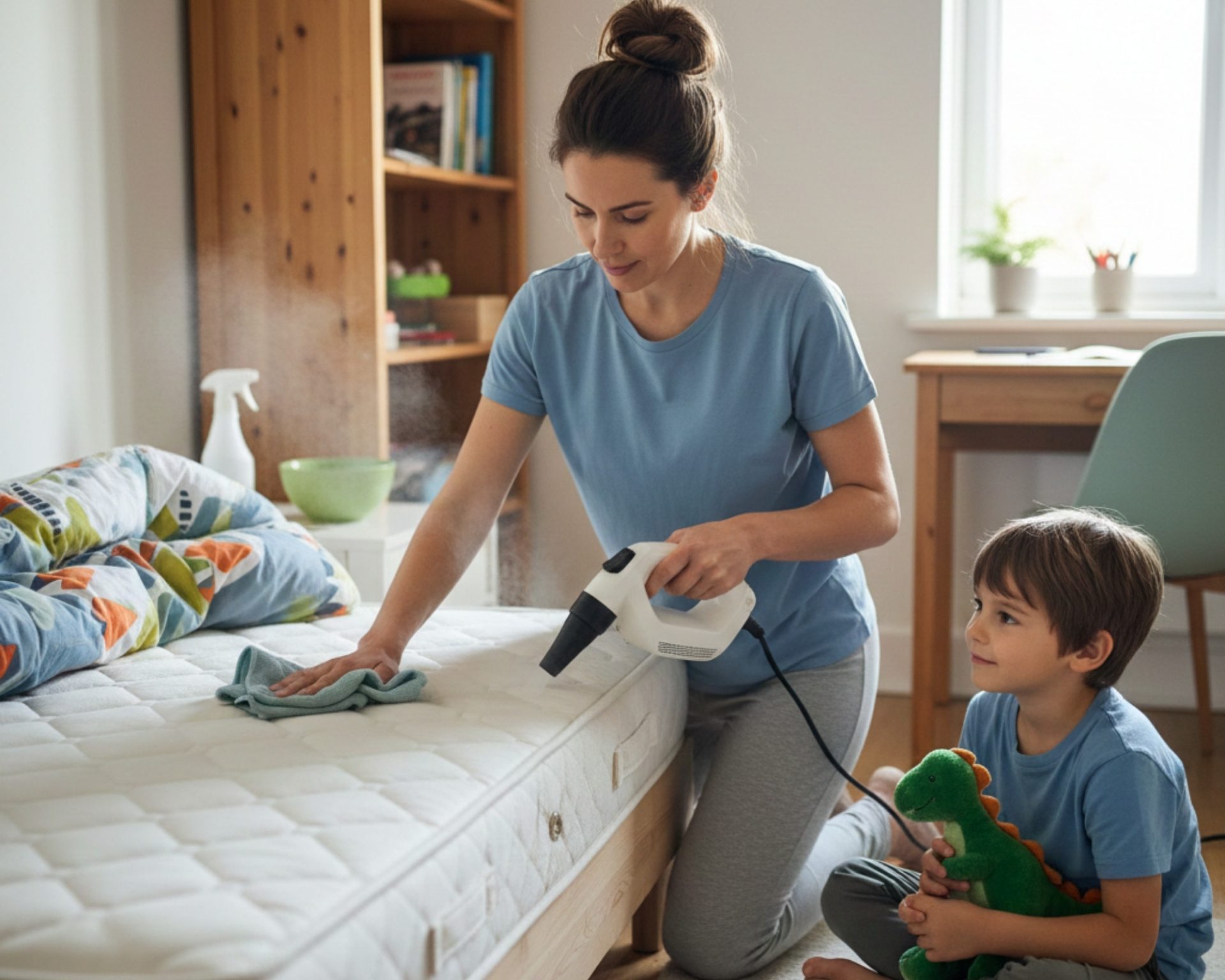
It’s 2 am. You wake to your child calling out, upset and uncomfortable. The room has an unwelcome yet all-too-familiar smell: urine – again. You’d placed an absorbent pad on the bed, but your child has wriggled off it in their sleep and now the mattress is soaked.
Moments like these are challenging for families. Nobody relishes regular nighttime disturbances that break-up sleep and generate extra work.
Here, we’ll guide you through the right way to clean and dry a mattress after bedwetting while soothing and reassuring your child.
First things first
Your child’s probably feeling groggy, damp, upset and embarrassed. Take a moment to reassure them that they’re OK and that plenty of children wet the bed (up to 20% of 5-year-olds, in fact1). Get them cleaned up and changed into fresh PJs.
You might choose to settle them into a different bed for the rest of the night or you might get them snuggled under a blanket while you freshen their bed.
Now, you’re ready to tackle their damp mattress.
Step-by-step guide: how to clean a mattress after bedwetting
When urine soaks into a mattress, it can move deep into the layers.2 Acting promptly reduces odours, staining and bacteria growth.
1. Blot away excess moisture
Use clean, dry towels to gently blot the wet area. Press firmly to absorb as much liquid as possible. Try to avoid rubbing, as this can push moisture deeper into the mattress.
2. Apply a mild cleaning solution
A simple mix of warm water and a small amount of gentle detergent can help lift fresh urine from the surface. Dampen a cloth lightly and blot the area. Do not soak the mattress, as excess water will slow drying and may trap odour.
If your child needs to get back into this bed tonight, then put a towel over the area, put on some fresh sheets and tackle the rest of the clean-up tomorrow. If your child can sleep somewhere else for the rest of the night, then progress to the next step.
3. Use bicarbonate of soda to reduce odour
Sprinkle a generous layer of bicarbonate of soda over the damp area. It helps absorb remaining moisture and neutralise odours. Leave it for several hours or overnight for best results.
4. Vacuum the residue
Once completely dry, vacuum the bicarbonate of soda. This removes the powder and prepares the mattress for thorough drying.
How to dry a mattress after bedwetting
Drying is essential to prevent lasting odours or dampness. A mattress can take longer to dry than expected, so creating good airflow is key.
1. Increase air circulation
Open windows to improve ventilation and place a fan near the mattress to help evaporate moisture. If possible, elevate the mattress slightly to increase airflow underneath.
2. Make use of indirect sunlight
Sunlight helps with drying and can assist with odour reduction. Position the mattress near a bright window or outside in a shaded, airy spot. Avoid leaving it in direct sunlight for long periods to prevent fading.
3. Use a dehumidifier
A dehumidifier can be helpful in humid climates or during winter. It pulls moisture from the air, which speeds up the drying process and helps prevent a musty smell.
4. Allow enough time
Depending on the depth of the mattress and the level of moisture, drying may take several hours. Ensure it is fully dry before placing bedding back on.
Protecting a mattress from bedwetting
If your child is regularly wetting the bed, then it’s worth taking some proactive steps to protect their mattress and make overnight clean-ups easier.
Useful protective options include:
- Waterproof mattress protectors: These are placed beneath the fitted sheet to prevent moisture from reaching the mattress.
- Absorbent bed pads: Available in reusable or disposable options and easy to replace during the night.
- Two-layer bedding method: Layering a waterproof protector and fitted sheet twice allows for quick changes without having to remake the entire bed at 2 am. You simply pull off the top layer and there’s a clean,dry bed ready and waiting.
Being prepared doesn’t stop your child wetting the bed, but it does minimise disruption and help you all get back to sleep more quickly. With calm steps and reassurance, you can help your child feel supported while you explore further guidance or treatment options with a healthcare professional.
When to seek guidance
It’s worth speaking to your GP if:
- Your child is aged 5+ and still wets the bed regularly.3
- Bedwetting is affecting not only your child’s sleep, but their self-esteem or participation in activities like camps or sleepovers.
- You, as a parent, are feeling increasingly worn down and exhausted by your child’s bedwetting.
Remember, bedwetting is common and treatable, and your doctor can provide advice and support tailored to your child’s needs.
Disclaimer
All information is general and not intended as a substitute for professional advice.
References
- Glazener CMA, Evans JHC, Peto RE; Cochrane Incontinence Group. Alarm interventions for nocturnal enuresis in children. Cochrane Database Syst Rev. 2020; (5):CD002911. Available from: https://www.cochrane.org/evidence/CD002911_alarm-interventions-nocturnal-enuresis-bedwetting-children
- Sleep Foundation. How to get urine smell and stains out of a mattress [Internet]. SleepFoundation.org; [cited 2025 Dec 08]. Available from: https://www.sleepfoundation.org/mattress-information/how-to-get-urine-smell-and-stains-out-of-a-mattress
- Harris J, Lipson A, Dos Santos J; Community Paediatrics Committee. Evaluation and management of enuresis in the general paediatric setting. Paediatr Child Health. 2023;28(6):362–8. doi:10.1093/pch/pxad023