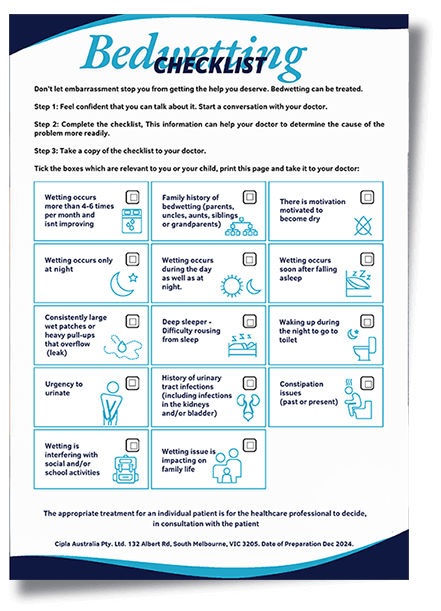
A simple guide to help you and your doctor understand your child’s bedwetting and explore treatment options.
- Track how often bedwetting happens and any patterns
- Make conversations with your doctor easier
- Support diagnosis and treatment planning
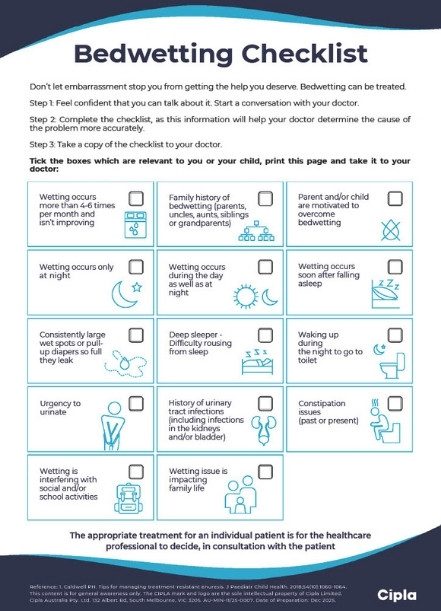
How the checklist works

1. Download the checklist
Get your free PDF instantly – view it on your phone, tablet or computer, or print it out.

2. Fill it in with your child’s patterns
Record bedwetting frequency, time of night, fluid intake and any daytime symptoms.

3. Take it to your doctor
Use the checklist to guide your conversation, support diagnosis and discuss treatment options – including whether medication might help.
Bringing a completed checklist helps your doctor see the full picture and plan the best treatment for your child.
Your child does not need to suffer alone
Bedwetting can be stressful for the whole family. Children may feel ashamed, worried about sleepovers, or scared to tell friends. Parents often lose sleep changing sheets and doing extra washing.
You are not alone, and it’s not your child’s fault. Understanding patterns with a checklist is a powerful first step toward getting help.


What help is available?
Bedwetting is common and highly treatable. A doctor can help you understand why it’s happening and discuss options such as behaviour strategies, bedwetting alarms and medication prescribed by your doctor.
- Book a doctor’s appointment if your child wets the bed more than 4–6 times per month
- Bring your completed checklist so your doctor can see patterns over time
- Ask about all treatment options, including whether medication is suitable for your child

More helpful resources


Colouring Page
To help guide conversions with your little one and the doctor.

Videos
Watch tailored videos on bedwetting causes, treatment options and family support strategies from our resource hub

Bedwetting FAQs
Is bedwetting normal?
Yes. Bedwetting is very common in children and often runs in families. Many children under 5 still wet the bed, and some older children do as well. It’s usually not a sign that anything is “wrong” with your child.
At what point is bedwetting considered a problem?
Occasional wet nights can be normal. If your child is 5 years or older and wets the bed more than 4–6 times per month, it may be time to talk to a doctor about treatment options.
Is bedwetting my child’s fault?
No. Bedwetting is not caused by laziness or bad behaviour. It’s often linked to deep sleep, bladder capacity, or how the brain and bladder communicate during sleep. Punishing or blaming your child can make them feel worse and doesn’t stop the wetting.
Does drinking too much before bed cause bedwetting?
Drinks close to bedtime can sometimes make wetting more likely, but they’re not the main cause. Bedwetting usually happens because of how the body and brain manage urine overnight. Your doctor can help you manage fluids as part of a broader treatment plan.
What treatments are available for bedwetting?
Treatment options can include:
- Behaviour and lifestyle strategies
- Bedwetting alarms
- Medication prescribed by a doctor
The right option depends on your child’s age, how often they wet the bed, and any other symptoms. A doctor can help you choose the best approach
Download your free bedwetting checklist
Take the pressure off guessing. Use our simple, structured checklist to track your child’s bedwetting and help make your next doctor visit easier.