Bedwetting is common. Many children over 5 still wet the bed,
and it’s usually not their fault.
What is bedwetting?
Bedwetting (also called primary nocturnal enuresis) is when a child who is 5 years or older wets the bed while sleeping on a regular basis. It happens during the night, not on purpose, and is usually linked to how the brain and bladder communicate during sleep.

Happens while your child is asleep and unaware

Not usually caused by drinking “too much” water before bed

Often linked to deep sleep, bladder size, or hormone levels
How common is bedwetting?
Around 1 in 5 children in Australia experience bedwetting¹, making it one of the most common childhood conditions. Many families experience it, often for several years.
Did you know?
- If one parent wet the bed as a child, the chance that their child will wet the bed is higher.
- If both parents did, the chance is higher again. Bedwetting is about biology, not bad behaviour.

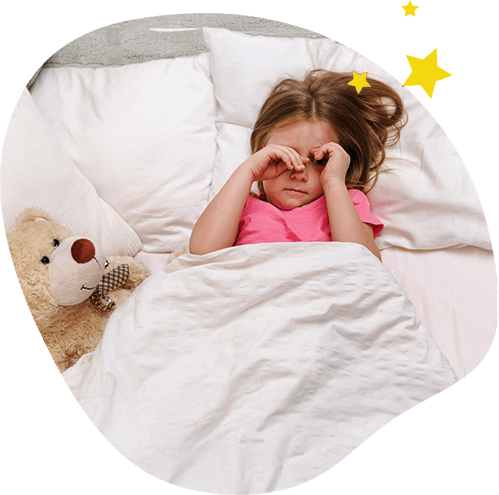
When is it considered a problem?
Occasional wet nights are common. If your child wets the bed more than 4–6 times a month 2, it may help to talk to a GP about what’s going on and what support is available.
How it can affect kids and families
Bedwetting doesn’t just mean changing the sheets. It can affect how children feel about themselves – and how the whole family feels at home.

For children, bedwetting can:
- Knock their confidence – some kids feel ashamed, “babyish” or like they’ve let you down
- Make social situations stressful – sleepovers, school camps and holidays can suddenly feel scary
- Affect their mood – they may become more anxious, clingy, irritable or quiet
- Disrupt their sleep – waking in the night, being changed, or worrying about wetting can all lead to tired days
For parents and carers, it can:
- Create extra work – more washing, changing beds, late-night clean-ups
- Cause worry or frustration – about what’s “normal”, what to try next, or how long it will last
- Impact family routines – siblings may be disturbed, and mornings can feel rushed or tense
- Bring up guilt – many parents blame themselves or worry they’ve done something wrong


For the whole family, it can:
- Limit activities – avoiding sleepovers, trips or camps to prevent embarrassment
- Increase tension at home – especially if everyone is tired or stressed
- Make conversations tricky – children may shut down or get upset if they feel blamed
Explore our bedwetting resources, including a printable bedwetting checklist to track what’s happening over time and support calmer conversations at home (and with your GP if you choose).
What are the possible treatment options?
There are several ways to help manage bedwetting. Your doctor can help you find the right option for your child.
| Feature | Behaviour & lifestyle strategies | Bedwetting alarms | Medication (medical treatment) |
|---|---|---|---|
| How it works | Regular toilet trips, fluid timing, reward charts, and managing constipation. | A small sensor detects moisture and sets off an alarm to wake your child when wetting starts. | Medicine prescribed by your doctor helps reduce or temporarily stop bedwetting episodes. |
| Pros | Helps to understand the issue and build healthy habits. | Can help some children learn to wake to bladder signals over time. | May help reduce or temporarily stop bedwetting episodes; can be useful for frequent wetting or special occasions (like camps and sleepovers), if your doctor thinks it’s appropriate. |
| Keep in mind | May not be enough on its own for children who wet the bed frequently. | Can take weeks or months; requires consistency from child and parents; disturbed sleep for the family. | Needs a doctor’s assessment and prescription; your doctor will explain benefits, risks, and how long to use it. |
Bedwetting often does not fully resolve on its own, especially when it happens often.
The good news: with the right support and treatment, many children see a big improvement.

When to see a doctor
Many children outgrow bedwetting. However, frequent bedwetting can lower a child’s confidence, disturb sleep, and make daily routines harder for the family.
Consider booking an appointment with your GP if:
- Your child is 6 years or older and wets the bed regularly
- Bedwetting happens more than 4–6 times per month2
- Your child is upset, embarrassed or avoiding sleepovers
- You’re worried about your child’s health, sleep or development
Chat to your GP or book a Telehealth Consultation
You are not alone, and help is available.
Our bedwetting checklist can help you identify bedwetting patterns and guide possible conversations with your GP
Common Bedwetting Myths vs Facts

Myth
My child will just grow out of it.

Fact
Some children do, but frequent bedwetting (more than 4–6 times a month2) may need medical support. Waiting could delay treatment and affect your child’s confidence.
Myth
Bedwetting is caused by laziness or drinking too much before bed.
Fact
Bedwetting is not about laziness. It’s often related to deep sleep, bladder capacity, or how the brain and bladder communicate during sleep³.
Myth
Only boys wet the bed.
Fact
Bedwetting affects both boys and girls, although it’s slightly more common in boys4.
Myth
There’s nothing you can do about it.
Fact
Bedwetting can often be improved with the right support, such as behaviour strategies, alarms, or medication prescribed by a doctor5,6.
Helpful resources for your family
Explore these resources to support your child and make doctor visits easier:

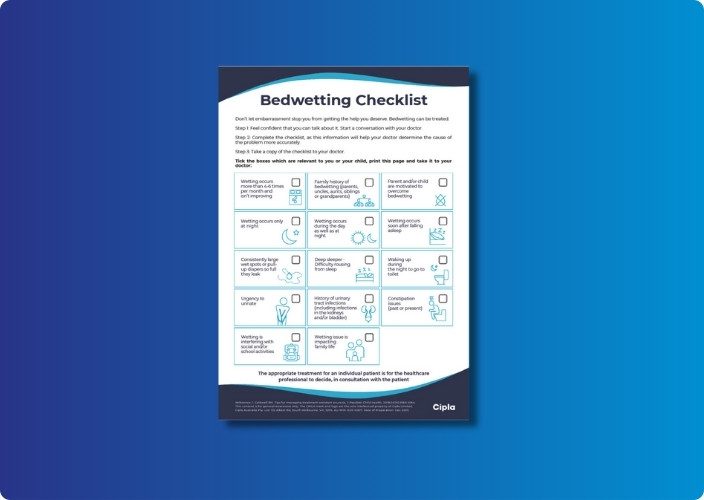
Bedwetting Checklist
The information on this checklist will help you to start a conversation with your doctor.

Videos
Watch tailored videos on bedwetting causes, treatment options and family support strategies from our resource hub

Bedwetting FAQs
Is bedwetting normal?
Yes. Bedwetting is very common in children and often runs in families. Many children under 5 still wet the bed, and some older children do as well. It’s usually not a sign that anything is “wrong” with your child.
At what point is bedwetting considered a problem?
Occasional wet nights can be normal. If your child is 5 years or older and wets the bed more than 4–6 times per month, it may be time to talk to a doctor about treatment options.
Is bedwetting my child’s fault?
No. Bedwetting is not caused by laziness or bad behaviour. It’s often linked to deep sleep, bladder capacity, or how the brain and bladder communicate during sleep. Punishing or blaming your child can make them feel worse and doesn’t stop the wetting.
Does drinking too much before bed cause bedwetting?
Drinks close to bedtime can sometimes make wetting more likely, but they’re not the main cause. Bedwetting usually happens because of how the body and brain manage urine overnight. Your doctor can help you manage fluids as part of a broader treatment plan.
What treatments are available for bedwetting?
Treatment options can include:
- Behaviour and lifestyle strategies
- Bedwetting alarms
- Medication prescribed by a doctor
The right option depends on your child’s age, how often they wet the bed, and any other symptoms. A doctor can help you choose the best approach
References
- Sleep Health Foundation. Bedwetting in children [Internet]. Blacktown (NSW): Sleep Health Foundation; 2025 Mar 25. Available from: https://www.sleephealthfoundation.org.au/sleep-disorders/bedwetting-in-children
- Caldwell P, Ng C. Bedwetting: a practical approach to assessment and management. Med Today. 2008;9(6):16-24.
- Zhu B, Zou K, He J, Huang X, Zhu W, Harb AKA, et al. Sleep monitoring of children with nocturnal enuresis: a narrative review. Front Pediatr. 2021;9:701251.
- American Academy of Pediatrics. Nocturnal enuresis in teens. HealthyChildren.org. Available from: https://www.healthychildren.org/English/health-issues/conditions/genitourinary-tract/Pages/Nocturnal-Enuresis-in-Teens.aspx
- Caldwell PHY, Nankivell G, Sureshkumar P. Simple behavioural interventions for nocturnal enuresis in children. Cochrane Database Syst Rev. 2013;(7):CD003637.
- Glazener CMA, Evans JHC, Peto RE. Alarm interventions for nocturnal enuresis in children. Cochrane Database Syst Rev. 2005;(2):CD002911.
- Butler R, McKenna S. Overcoming parental intolerance of nocturnal enuresis: a survey. BJU Int. 2002;89(3):295-297.
- Hägglöf B, Andrén O, Bergström E, Marklund L, Wendelius M. Self-esteem before and after treatment in children with nocturnal enuresis and urinary incontinence. Scand J Urol Nephrol Suppl. 1997;183:79-82.
- Butler RJ, Holland P. The three systems: a conceptual way of understanding nocturnal enuresis. Scand J Urol Nephrol. 2000;34(4):270-277.