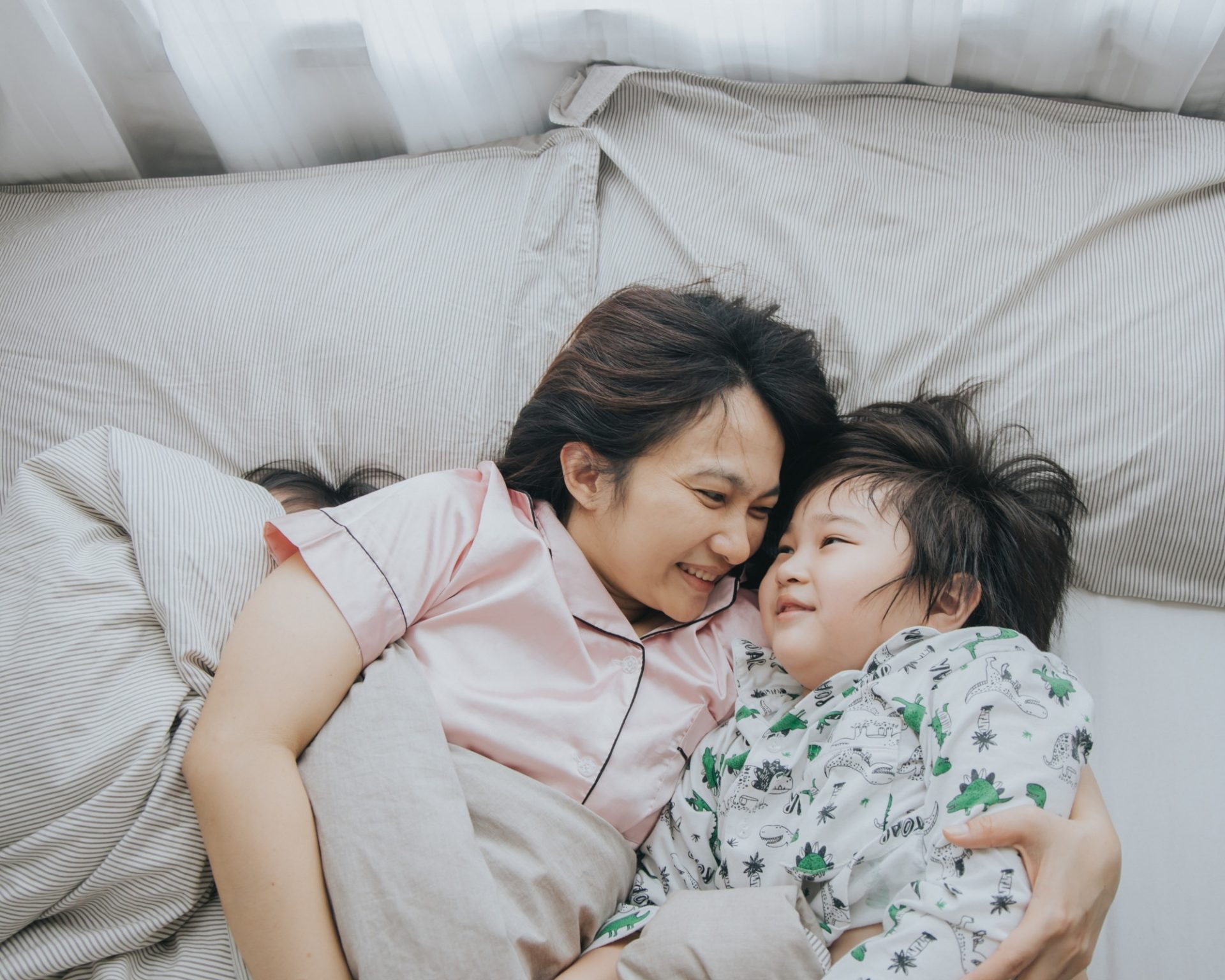
Kids can be fascinating and puzzling! They’ll correct your pronunciation of “ankylosaurus,” give you an unsolicited lecture on ancient Egyptian burial customs, and construct Lego masterpieces that would make The Brickman proud.
When they can memorise every Pokémon evolution and operate the iPad better than you can, why, oh why can’t they stay dry at night? When they’re so knowledgeable and capable in many ways, why do they still wet the bed at night?
Bedwetting (nocturnal enuresis) affects a sizable minority of children and there are well‑documented, research‑based reasons why it happens. Bedwetting involves the complex coordination of bladder capacity, brain signalling, sleep patterns and genetics.
Here, we outline the main scientific explanations for bedwetting to help you understand what might be going on for your child.
What is nocturnal enuresis?
Nocturnal enuresis is defined as involuntary urination during sleep in children aged 5 years or older.1
Primary enuresis occurs when the child has never had 6 months of nighttime dryness. Secondary enuresis refers to bedwetting that begins again after a child has been dry for at least 6 months.1
Studies suggest that 5–10% of 7‑year‑old children continue to experience nocturnal enuresis.2
Although many children eventually outgrow it, enuresis can cause embarrassment, social stress, and reduced self‑esteem1 — so understanding the underlying causes is important for both families and clinicians.
Nocturnal bedwetting causes
Research identifies several physiological and genetic mechanisms — often overlapping — that contribute to nocturnal enuresis.
High urine production at night (nocturnal polyuria)
Have you ever wondered why we can go so many hours without urinating overnight? It’s partly due to an antidiuretic hormone called arginine vasopressin (AVP), which reduces urine production at night.3
In children with nocturnal enuresis, the normal nocturnal surge of AVP may be blunted or absent. As a result, they produce more urine during sleep than their bladder can hold.3
Reduced bladder storage capacity or overactivity
Some children may have a relatively small functional bladder capacity, or their bladder’s detrusor muscle may contract involuntarily during the night (detrusor overactivity), leading to bedwetting even if urine production is not excessive.4
Impaired arousal during sleep
Many children with enuresis do not wake when their bladder becomes full. According to a recent systematic review, children and adolescents with bedwetting show different sleep architecture compared with peers — suggesting that high arousal thresholds or sleep‑arousal disorders play a key role.5
Genetic predisposition
Genetics plays a substantial role in nocturnal enuresis. A large genome‑wide association study recently identified common genetic variants associated with enuresis, implicating genes involved in bladder function, sleep regulation, and urine production.6
Family studies show that children whose one or both parents had childhood bedwetting are far more likely to experience enuresis themselves — underlining the heritable nature of the condition.4
Interaction between sleep, bladder function and the nervous system
Emerging research suggests that the autonomic nervous system, which controls automatic body functions like breathing, sleep, and bladder control, might play a role in bedwetting. If this system isn’t working smoothly, it could make it harder for a child to stay dry at night, although scientists are still learning exactly how this works.7
For many children, there is no one cause of nighttime bedwetting. Often it’s a combination of the above issues – excess overnight urine production, bladder capacity, sleep‑arousal thresholds, genetics, and nervous system regulation — that leads to bedwetting.
Other bedwetting causes
While the majority of nocturnal enuresis is due to developmental, genetic, and physiological factors, other medical or lifestyle-related factors can contribute in some cases.
Medical conditions
If your child has been dry at night but is now wetting the bed, it’s important to rule out underlying medical conditions like:
- Diabetes
- Urinary tract infections
- Emotional upheavals or stress, which may contribute to bedwetting.10
Sleep disorders
Obstructive sleep apnoea or restless leg syndrome may make it harder for a child to wake up, thereby contributing to bedwetting.8
ADHD and bedwetting
Children with ADHD are more likely to experience bedwetting compared to their peers, probably due to overlapping brain mechanisms that affect both attention regulation and bladder control.9
Teenagers and bedwetting
As their bodies mature (or they access treatment), many children cease wetting the bed at night.
However, bedwetting can persist in teenagers, especially if they have a stronger genetic predisposition, persistent bladder‑brain regulation issues, or overlapping risk factors, such as sleep disturbances or coexisting medical conditions.6
What does this mean for parents and families?
Hopefully, it means you can breathe a little easier. Bedwetting isn’t due to poor parenting or bad behaviour on your child’s part. It’s a developmental and physiological issue.
If nighttime bedwetting is causing distress for your child or your family, then please talk to your GP about it. They may review your child’s medical history, order tests and discuss sleep patterns. They may also recommend evidence-based treatments to help reduce the frequency of bedwetting so your family can sleep better.
Disclaimer
All information is general and not intended as a substitute for professional advice.
References
- Guzman JA, Palmer LS. Nocturnal enuresis. Pediatr Rev. 2024;45(8):479–81.
- Pedersen MJ, Rittig S, Jennum PJ, Kamperis K. The role of sleep in the pathophysiology of nocturnal enuresis. Sleep Med Rev. 2020;49:101228.
- Kamperis K. Nocturnal enuresis in children: the role of arginine–vasopressin. In: Swaab DF, Buijs RM, Lucassen PJ, Salehi A, Kreier F, editors. Handbook of Clinical Neurology. Vol. 181. Amsterdam: Elsevier; 2021. p. 289–97.
Lauters RA, Garcia KW, Arnold JJ. Enuresis in children: common questions and answers. Am Fam Physician. 2022 Nov;106(5):549–56. - Fernandes AER, Roveda JRC, Fernandes CR, et al. Relationship between nocturnal enuresis and sleep in children and adolescents. Pediatr Nephrol. 2023;38:1427–38.
- Jørgensen CS, Petersen TS, Pedersen CB, Bybjerg-Grauholm J, Bækvad-Hansen M, Grove J, et al. Identification of genetic loci associated with nocturnal enuresis: a genome-wide association study. Lancet Child Adolesc Health. 2021;5(3):201–9.
- Angeli M, Bitsori M, Rouva G, Galanakis E. The role of the autonomic nervous system in nocturnal enuresis. J Pediatr Urol. 2023;19(1):6–18.
- Zhu B, Zou K, He J, Huang X, Zhu W, Harb AKA, et al. Sleep monitoring of children with nocturnal enuresis: a narrative review. Front Pediatr. 2021;9:701251.
- Aljabri B, AlSolami J, Alnakhli A, Ahmed A, Alsharief A. Prevalence of enuresis in children, adolescents, and young adults diagnosed with attention deficit hyperactivity disorder. Cureus. 2024 Feb 27;16(2):e55073.
- Lauters RA, Garcia KW, Arnold JJ. Enuresis in children: common questions and answers. Am Fam Physician. 2022 Nov;106(5):549–56.